WAWONA, Calif. – On a recent Tuesday, a group of medical students was searching for missing hikers. They ran through brush, climbed over logs, and weaved through tall trees in Yosemite National Park, on a hiking trail near the Wawona Hotel.
As soon as the students found them, they began their assessment, asking the hikers questions to determine the severity of their injuries.
Although this sounds like a real-life scenario, it’s actually part of a medical school elective for aspiring doctors.
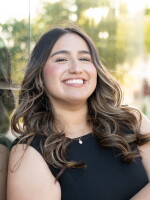
“It pushes you to be creative, be resourceful, and also really pushes you [when] working as a team,” fourth-year medical student Tina Mai said. “You have to have structure and communication and plan ahead.”
Mai is one of nearly fifteen med students participating in this search and rescue mission.
The exercise is part of a two-week wilderness medicine course offered through the Emergency Medicine department of the University of California, San Francisco - Fresno campus.

In this course, students spend six days in Yosemite learning how to respond to emergencies in remote environments. That means thinking beyond what these future doctors would normally have available in a hospital setting.
“Sometimes you may not be carrying a splint or tarp to help with evac[uation], so we have to be creative in what we have around,” Mai said.
Every year, roughly 20 students from across the United States enroll in this elective course. They come from a variety of medical fields, including emergency medicine, pediatrics, general surgery and neurology.
Dr. Michelle Storkan is the director of the elective. She’s a professor of emergency medicine, but she said this course is applicable to all medical disciplines.
“Those kinds of skills will help you as a physician in the hospital, and no matter what specialty you're in, and just help you be more adaptable to what comes our way,” Storkan said.

So why send this group of students all the way out to Yosemite instead of a wilderness area closer to the UCSF Fresno campus? The park has a close relationship with the university. Many people injured in Yosemite or other nearby national parks commonly get transported to Community Regional Medical Center in downtown Fresno – and that’s where many of these students are training.
“We are basically the highest level one trauma center for a long ways,” Storkan said. “If there's something that happens in the south part of the park and the west side of the park, we're likely to see them.”
Some of these students will someday work as doctors who treat injuries in hospitals. Others might actually work outside of those walls as part of a search and rescue unit or Navy medical team, for example.

No matter where they decide to practice medicine, Storkan says it’s important for them to understand what it’s like to treat patients with limited resources.
Dr. Lily Hitchner, another professor of emergency medicine at UCSF Fresno, agrees.
“We have so many resources at our fingertips in the hospital, and in the wilderness we have to improvise and problem-solve in different ways,” Hitchner said.
She went through the same wilderness medicine elective when she was in medical school. She said that not only did it help her improve her problem-solving and critical thinking skills, but it drove her to lay down roots in Fresno.
“I wasn’t planning on staying initially, but really [I] fell in love with the people here and really the work that we do in our emergency department and with medical education,” Hitchner said.
Although she says not much has changed since she participated as a student, one thing has: the name of the program.
Dr. Lori A. Weichenthal started the elective course almost 25 years ago and it quickly became a highly recognized wilderness medicine program. She directed the course until 2016, when she handed the position to Dr. Storkan.
In February of 2023, Weichenthal died after prolonged illness. And in a small gathering at the Wawona Campsite during this year’s course, colleagues, students, and her husband honored her.

The program has officially been renamed the Lori A. Weichenthal Wilderness Medicine Elective.
On top of the search and rescue scenarios, the course also brings students through water safety and rescues, navigating low visibility and building fires.
Mai, the UCSF Fresno medical student, has plans to become a general surgeon. She says the course has changed how she thinks about treating patients.
“I'm very interested in acute patients as well as low-resource circumstances,” Mai said. “And this elective has been teaching me very practical skills I can apply whether in the hospital or out in the wilderness here.”