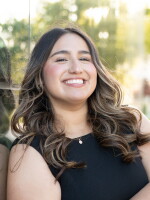
FRESNO, Calif. – Most Californians probably don’t think much about the state Board of Equalization. But two Central Valley leaders think you should.
The agency oversees how property taxes are assessed across the state, which is a responsibility that can affect not just homeowners, but also the budgets of schools and local governments.
In this year’s midterm election, two Valley politicians are competing to represent District 1, whose sprawling region encompasses the entire San Joaquin Valley. Fresno City Councilmember Nelson Esparza and Bakersfield State Sen. Shannon Grove are campaigning to represent the region on the five-member board.
The board’s authority was reduced significantly in 2017, when the state governor and legislature rearranged the state’s tax administration agencies. But Fresno State political science professor Lisa Bryant says that the board’s responsibilities shouldn’t be underestimated.
“They are really doing a lot of important work that ends up affecting our pocketbooks,” Bryant said.
What does the Board do?
Created by a constitutional amendment in 1879, the Board of Equalization helps ensure that properties are assessed fairly and consistently across the state’s 58 counties.
The board doesn’t generally collect property taxes directly. Rather, the agency oversees county assessors and helps ensure they follow state laws and rules of assessment. Board members also hear appeals that involve property assessments and exemptions.
The agency also assesses some properties owned by utilities and railroads, and it oversees many specialized taxes like the Alcohol Beverage Tax.
In the past, the Board of Equalization had a much broader role in the tax system in California, managing approximately 30 tax and fee programs. It assessed things like retail sales taxes, fuel taxes, and fire prevention fees. But under the previous Gov. Jerry Brown, California transferred much of its tax collection and other administrative work to newly reorganized agencies.
The Board of Equalization’s staffing was cut substantially, but it managed to retain its oversight responsibilities on property tax. The board now focuses on three main tax and fee programs, down from the over 30 from before 2017. Those responsibilities matter partly because property taxes are a major source of funding for local governments and public schools.
“If we want to make sure that we are taxed in a fair and transparent manner, we want to make sure that we have people in office that we think are going to hold our local county tax assessors accountable, but also make sure that we have good, fair policies,” Bryant said.
Why Valley leaders want the job
District 1 covers the largest region of the board’s four districts. It stretches from California’s northern border through the entire Central Valley and into San Bernardino County. This district includes communities with an extensive range of economic needs, from urban centers to rural agricultural regions.
Democrat Nelson Esparza said he entered the race because he believes he can help the inland residents especially.
“I thought I could make a financial difference for inland communities and be able to do a good job in this office and help fill coffers in some of the most vulnerable communities throughout the state,” he said.
Esparza is terming out after eight years on the Fresno City Council. He said his experience working with other councilmembers to draft legislation and develop local financing strategies would help him navigate this five-member board.
He points to his work early in his tenure on the city council to create an enhanced infrastructure financing district in the city, which he said brought resources to his community without raising taxes. Esparza’s priorities include improving transparency, outreach and making the board more responsive to local communities.
“It’s not a legislative body. We’re not necessarily going to create new taxes or anything like that,” he said. “What’s really within our purview is how we administer, how we execute what the law is.”
He says he understands that residents want to speak to someone and feel like they are being heard. The elected board members, he states, must be able to see the human side of an issue and adjudicate accordingly.
Shannon Grove, a Republican who has represented parts of Kern, Tulare and Fresno counties in the State Senate for 12 years, is terming out – but said she wants to continue work in public service.
“I just wanted to be able to stay involved and continue to fight for the taxpayer and the homeowner and the individuals who are struggling, and this was an opportunity for me to stay involved,” she said.
She said her experience working with state agencies and lawmakers and co-founding a staffing company that helps provide jobs for people in the community would help her to serve on the board. If elected, Grove said she would prioritize efficiency, fair property assessments and helping people in District 1 navigate government agencies.
“Success would look like processing people’s paperwork in a timely manner without delays [and] making sure that we have fair assessments on everybody who has a property,” Grove said. “We want to make sure that your tax value is assessed at the lowest value possible so that you don't pay a penny more than you’re supposed to pay.”
In the primary election this past June, Grove received 672,039 votes, and Esparza received 664,072 votes. The two topped other District 1 candidates overwhelmingly with 34.5% and 34.0% of the total votes, respectively.
Bryant, the political science professor, said the candidates bring different strengths to the race. For instance, Grove has more years of experience in state government and lawmaking, while Esparza brings experience with local government, accounting and the ways taxes affect school districts and cities.
“It’s interesting that both of them come right from the heart of the Central Valley, which might work to their benefit,” Bryant said. “But the name reach might matter a lot in a district that is very large.”
For voters, the deciding factor may come down to what they want from the office: a particular approach to tax assessments or experience navigating the state government.