-
 The Penny-Newman Grain Company began in 1874 as pioneering Fresno retail store Kutner & Goldstein.
-
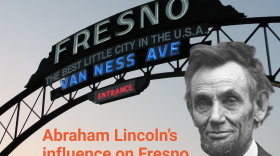 Fresno owes its existence in no small part to three laws signed by Abraham Lincoln in 1861-1862.
-
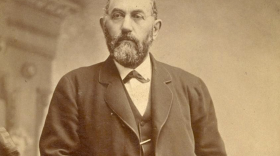 A group of German immigrant land speculators placed a big bet on the potential of the Fresno area in the late 1860s. While most of them eventually went broke, they left a legacy that still exists today.
-
 City and business leaders in the San Joaquin Valley denounced immigration raids that started in early October and called for congressional policy solutions.
-
 Anthony Easterby's farm proved the potential of irrigated agriculture and led the Central Pacific Railroad to found the new town of Fresno nearby.
-
 After World War II, leaders agreed Fresno State needed to move to a new campus. But where to build it proved to be a big problem.
-
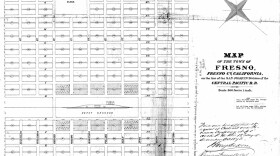 The Fresno plain was a harsh, nearly featureless landscape in the 1860s. But one site stood out: a large green bush near what is today downtown Fresno.
-
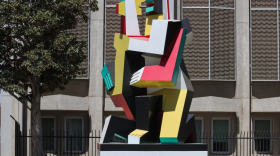 Fresno is the largest city in California without its own arts and culture department, office or division at City Hall.
-
 Dixon's landscape paintings ranged in styles from impressionism to angular modernism, all while capturing the beauty of the Southwestern landscape.
-
Barry McGuire and Terry Talbot had their own big hits during the anti-war movement, before they both moved to Fresno and shifted their careers into worship music.

© 2026 KVPR / Valley Public Radio
89.3 Fresno / 89.1 Bakersfield
White Ash Broadcasting, Inc
2589 Alluvial Ave. Clovis, CA 93611
89.3 Fresno | 89.1 Bakersfield
Play Live Radio
Next Up:
0:00
0:00
Available On Air Stations


