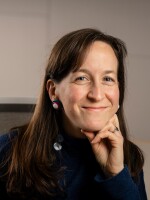
FRESNO, Calif. – Shabnam, an educator in Fresno, grew up in Iran but left for Europe and the U.S. as a young adult in order to pursue education and opportunity — things she said were limited for women under the oppressive and violent regime of former Supreme Leader Ali Khamenei.
But he was killed earlier this month in a series of airstrikes by U.S. and Israeli military forces. Those strikes kicked off a conflict that has stretched for more than a week and has expanded to include multiple countries throughout the Middle East.
At the same time, Iranian Americans in the San Joaquin Valley say they have hope and enthusiasm about the future of their home country despite the toll it has taken on civilians.
Shabnam, who initially agreed to use her full name but later requested to be identified using only her first name due to threats she has received for speaking to media, said she doesn’t support war, but does support intervention.
“For millions of Iranians, this is not just seen as a typical war. This is seen as a rescue mission,” she said. “For 47 years, the Iranian people have been held hostage by this regime that has suppressed every single voice and invested national wealth into the act of terrorism instead of its own citizens.”
She watched in horror earlier this winter as the Khamenei regime cracked down violently by killing thousands of Iranians who had taken to the streets to protest living conditions in the country.
“In January and during the previous protests, we saw unarmed civilians shot in the street for demanding basic human rights like freedom of speech, dignity and economic fairness,” she said.
Iran’s National Security Council estimated at the time that 3,117 people had been killed, including hundreds of security forces. However, some news outlets and human rights groups estimate the toll could have reached 37,000 or higher.
Shortly after, President Donald Trump took to the social media platform Truth Social to decry these “senseless killings” and to promise Iran that “help is on the way.”
Now that he’s made good on that promise, the U.S. has been divided in its response.
Most public support for the war appears to fall along political lines — with conservatives largely supporting the war and progressives opposing it — and an attempt by Congressional Democrats to limit Trump’s power in Iran narrowly failed last week.
Elected leaders in the San Joaquin Valley have also weighed in on the conflict. Fresno area Congressman Jim Costa called for a briefing to better understand Trump’s strategy. Fresno Mayor Jerry Dyer and City Councilmember Mike Karbassi referred to the conflict as an opportunity for Iran to gain new leadership.
Since the attacks began on Feb. 28, Fresno has also been the site of protests about the conflict as well as a candlelight vigil to honor the seven American soldiers who have died so far.
Could more civilians be at risk?
Dr. Mehdi Ghajar is an ophthalmologist in Fresno. He believes the potential for change in Iran has so far outweighed the costs of the conflict.
“This is absolutely what we've been begging for,” he wrote in a text message. He also previously spoke at length about the issue on KVPR’s Central Valley Daily podcast.
Ghajar was born in Iran, but his family left for the U.S. when he was a young child in order to avoid mandatory military service for his older brother. He’s lived in Fresno for 17 years.
As optimistic as he is for regime change, he understands this conflict is not without risks to civilians — including family members and friends still living in Iran.
“Do I have concern for my loved ones? Absolutely,” he said.
So far, Iran’s United Nations ambassador estimates more than 1,300 civilians have been killed since the U.S. and Israel began their attacks last week.
Ghajar said he doesn’t trust the estimates coming from the Iranian government — and also argued that the Khamenei regime was responsible for a far higher civilian death toll than that. Indeed, the human rights watchdog Amnesty International estimated last year that the regime executed 1,000 people in a period of just nine months.
“Over the last two years, the Islamist regime has had, minus the street killings, an average of one execution every six to eight hours,” Ghajar said.
He also said he’s not concerned that this conflict will evolve into a full-fledged, global war.
“If you look at it from a political perspective, what this regime has done…its allies have very superficial alliances with this regime,” he said.
Shabnam, too, said on Tuesday that her contacts on the ground in Iran remain more fearful of Iran's military than of attacks from the U.S. and Israel. She also argued that the country needs internet access, which the Khamenei regime cut off earlier this year.
"The regime wants to increase the civilian death toll by keeping them in absolute isolation," she said.
A politically complicated conflict
Armin Kooshkebaghi, a guitar teacher in Fresno, is also celebrating U.S. intervention. He said the real war in Iran was the atrocities the Khamenei regime had been committing against its own people.
Kooshkebaghi is a member of the Baha’i faith — a religious minority in Iran — and he said he left his home country as a teenager to escape violence and persecution.
He and the others who spoke with KVPR for this story are hopeful this conflict can help the country transition toward a secular, democratic government — potentially led by Reza Pahlavi, the son of Iran’s former shah who was exiled from the country in 1979.
In the meantime, Kooshkebaghi questions why human rights groups in the U.S. that had so adamantly supported peace in Gaza are now opposed to this conflict in Iran, when he views the end goals as the same.
“We're taken aback by the fact that…these groups are actually against this whole situation that's going on, and against this whole route that we're taking towards Iran's freedom,” he said — even going so far as to say that groups that oppose this conflict have blood on their hands by tacitly supporting the Khamenei regime.
He said he understands that many Americans simply want to protest actions by the Trump administration. He argues, however, that this situation goes beyond politics.
“We could hate [Trump] for everything else that he's done here in the US,” Kooshkebaghi said, “but what he did for Iran was very, very critical.”